


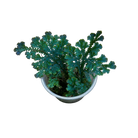
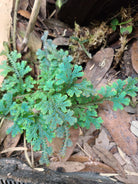
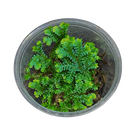
Selaginella uncinata
Pickup available at 1420 Costner School Road
Usually ready in 2-4 days
*Now a part of our MiniCup series (pictures 1 and 3)*
Native to southern China, Vietnam, and portions of Southeast Asia, Selaginella uncinata is a remarkable member of the Selaginellaceae family prized for its intense metallic blue iridescence and exceptional performance in high-humidity terrarium and vivarium environments. Often referred to as Peacock Moss or Blue Spike Moss, this ancient lycophyte is one of the most visually distinctive plants available to vivarium hobbyists, producing an electric blue sheen that appears almost unreal under proper growing conditions.
Despite its common name, Selaginella uncinata is not a true moss. It belongs to an ancient lineage of vascular plants that predates flowering plants by hundreds of millions of years. Like many Selaginella species, it grows as a creeping groundcover, producing finely divided stems that gradually form dense carpets across moist substrates, hardscape, and forest floor environments.
What makes this species famous is its coloration. Under high humidity and filtered lighting, the foliage develops an iridescent metallic blue appearance caused by microscopic structural properties within the leaves rather than pigmentation alone. Depending on viewing angle and lighting conditions, plants may display shades of emerald green, turquoise, cobalt blue, and even violet undertones. Few tropical plants create such dramatic visual effects while remaining relatively easy to cultivate.
In habitat, Selaginella uncinata grows along shaded forest floors, stream banks, and moist slopes where humidity remains consistently elevated throughout the year. These environmental conditions make it exceptionally well suited to dart frog vivariums, tropical terrariums, paludariums, and bioactive enclosures where stable moisture and filtered light are readily available.
Unlike many carpeting plants that simply spread across the substrate, S. uncinata develops layered mats of branching stems that create depth and texture throughout an enclosure. As stems root along contact points, colonies gradually expand and can eventually cover substantial areas of hardscape and substrate. This growth habit makes it particularly useful for softening transitions between cork bark, driftwood, stone, mosses, and planted sections of the enclosure.
Consistent moisture is critical to long-term success. The species thrives in moisture-retentive substrates rich in organic matter and performs especially well in ABG-style mixes, tree fern fiber, sphagnum-based substrates, and other tropical vivarium media. While it appreciates constant moisture, the substrate should remain aerated rather than stagnant.
Humidity levels between 75–100% generally produce the most vibrant growth and strongest iridescent coloration. In lower humidity environments, plants often remain alive but lose some of the visual intensity that makes the species so desirable. Enclosed vivariums and greenhouse cabinets frequently produce the best results.
Lighting has a major influence on appearance. Bright filtered light typically maximizes iridescence, while excessively dim conditions may reduce the blue coloration. Direct intense lighting should be avoided, as delicate growth can be damaged and the plant may lose its lush appearance.
Within vivarium design, Selaginella uncinata is often used as a foreground carpet, stream-edge planting, or accent species beneath larger tropical plants. It pairs beautifully with mosses, miniature orchids, Marcgravia, Peperomia, Begonias, and tropical aroids, providing a color contrast rarely found in naturalistic plantings. The metallic blue sheen can help break up expanses of green while maintaining a highly natural rainforest aesthetic.
For terrarium and vivarium keepers seeking one of the most visually unique groundcover species available, Selaginella uncinata remains an outstanding choice. Its combination of prehistoric lineage, iridescent foliage, and excellent performance in humid environments has made it a staple among serious tropical plant collectors and naturalistic enclosure builders alike.