

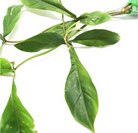
Philodendron 69686
Pickup currently unavailable at 1420 Costner School Road
Native most likely to the tropical rainforests of Brazil and originally associated with the legendary Roberto Burle-Marx collection, Philodendron 69686 is one of the most iconic and mysterious climbing aroids in modern cultivation. For years this plant circulated only under its collection number — “69686” — assigned by renowned aroid botanist Dr. Thomas Croat during research at the Missouri Botanical Garden. It has since also become associated with the cultivar name Philodendron ‘Bette Waterbury’, honoring one of the founding figures of the International Aroid Society.
Despite decades in cultivation, the exact origin and taxonomy of Philodendron 69686 remain uncertain. Many collectors believe it represents a natural hybrid, likely involving species related to Philodendron pedatum or other deeply lobed climbing Philodendrons. Its uncertain lineage only adds to its legendary status among aroid collectors.
What immediately sets Philodendron 69686 apart is its extraordinary foliage morphology. Juvenile plants often begin with relatively simple leaves, but as the plant matures and climbs, the foliage transforms dramatically into elongated, deeply lobed leaves with an unmistakable silhouette. Mature foliage develops a striking “big ears” appearance with narrow constricted centers and spreading lateral lobes that give the plant a highly architectural and almost prehistoric aesthetic.
Unlike many Philodendrons that remain relatively static through maturity, 69686 undergoes significant morphological change as it climbs and gains size. Given proper support and humidity, mature specimens can produce truly spectacular leaves that become increasingly dramatic with each successive growth stage. This dynamic transformation is one of the major reasons the species has become so coveted within the aroid hobby.
As a member of the Araceae family, Philodendron 69686 thrives under warm, humid tropical conditions with bright filtered light and excellent airflow. In cultivation, it performs exceptionally well mounted to moss poles, tree fern totems, cork slabs, or within large tropical vivariums and greenhouse cabinets where humidity remains consistently elevated.
This is not a compact terrarium species long-term, but juvenile plants and cuttings adapt very well to humid vivarium culture during early growth stages. In larger enclosures, the plant can become an incredible climbing centerpiece as aerial roots attach aggressively to backgrounds and hardscape.
A chunky, airy substrate is highly recommended. Like many climbing Philodendrons, the roots appreciate oxygenation and do poorly in dense compacted soils. Mixes containing orchid bark, coarse perlite, tree fern fiber, coco husk, charcoal, sphagnum moss, and ABG-style components all work exceptionally well. The substrate should remain lightly moist while still allowing excellent drainage and airflow around the roots.
Bright indirect lighting encourages tighter internodal spacing and stronger foliage development. Under insufficient light, growth may become stretched and juvenile leaves may persist longer before transitioning into mature morphology.
Humidity levels between 70–100% produce the best results, particularly during active climbing growth. Consistent moisture and humidity also encourage stronger aerial root production and more dramatic leaf expansion. While adaptable once established, this plant truly excels when provided greenhouse-style tropical conditions.
For serious aroid collectors, Philodendron 69686 occupies a unique place in cultivation history — part botanical mystery, part collector legend, and part living sculpture. Few Philodendrons combine such dramatic maturity shifts, historical significance, and unmistakable foliage architecture into a single plant.