

Selaginella erythropus
Pickup currently unavailable at 1420 Costner School Road - MUST SCHEDULE LOCAL PICKUP ORDERS - 6787991161
Native to tropical regions of Central and South America, including countries such as Costa Rica, Panama, Colombia, Ecuador, Peru, Venezuela, and Brazil, Selaginella erythropus is one of the most distinctive members of the Selaginellaceae family and a longtime favorite among vivarium enthusiasts. Commonly known as Red-Spike Moss or Ruby Red Selaginella, this ancient lycophyte is prized for its unusual coloration, creeping growth habit, and exceptional ability to create lush tropical groundcover in high-humidity environments.
Despite often being referred to as a moss in the hobby, Selaginella erythropus is not a true moss at all. Instead, it belongs to an ancient lineage of vascular plants that predates flowering plants by hundreds of millions of years. This unique evolutionary history contributes to its distinctive appearance and growth habit, which differs substantially from both true mosses and most tropical foliage plants.
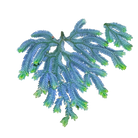
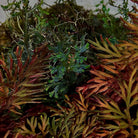
The defining feature of Selaginella erythropus is its coloration. The upper surface of the foliage is typically rich green to blue while the undersides display shades of deep burgundy, ruby red, or wine-colored pigmentation. As stems weave throughout an enclosure and foliage layers overlap, flashes of red become visible beneath the canopy, creating a depth and complexity rarely achieved with standard green groundcover plants. Under bright filtered lighting and high humidity, this contrast can become particularly striking. They become bluer under lower light, and redder under higher light.
In habitat, Selaginella erythropus grows along humid forest floors, stream margins, moss-covered slopes, and shaded rainforest understories where moisture remains consistently available throughout much of the year. These conditions make it exceptionally well adapted to tropical terrariums, dart frog vivariums, paludariums, and bioactive enclosures where humidity remains elevated and direct sunlight is absent.
Unlike many carpeting plants that grow primarily outward, Selaginella erythropus forms intricate branching networks of stems that gradually create dense layered mats. This growth habit allows it to soften hardscape transitions, fill open planting areas, and establish a mature rainforest appearance surprisingly quickly. Given stable moisture and humidity, stems readily root along contact points, allowing the plant to slowly colonize suitable surfaces throughout the enclosure.
The species performs best in consistently moist substrates rich in organic matter. ABG-style mixes, tree fern fiber, sphagnum moss, and other moisture-retentive terrarium substrates all support vigorous growth. While the plant appreciates constant moisture, good drainage remains important, as stagnant waterlogged conditions can lead to decline over time.
Humidity is one of the most important factors in successful cultivation. Levels between 70–100% generally produce the healthiest growth and most attractive coloration. In lower humidity environments, foliage may become less vibrant and growth can slow considerably. Within enclosed vivariums, however, Selaginella erythropus often becomes one of the easiest and most rewarding tropical groundcover species to maintain.
Bright indirect light encourages compact growth and stronger red pigmentation beneath the foliage. Excessively dim conditions may reduce coloration, while harsh direct light can damage delicate growth tips and dry the plant unnecessarily.
Within vivarium design, Selaginella erythropus is particularly effective when used alongside mosses, Marcgravia, miniature orchids, Peperomia, Begonias, and tropical aroids. Its unique coloration provides contrast against traditional green foliage while helping create the layered understory structure characteristic of mature rainforest ecosystems. It is equally useful as a foreground carpet, background accent, or transitional species between hardscape and planted areas.
For keepers seeking a tropical plant that combines unusual coloration, manageable growth, and excellent terrarium performance, Selaginella erythropus remains one of the most versatile and visually distinctive species available for humid vivarium culture.